Angolan Logistical Corridor as a Means of Social and Economic Development of Southern Africa Region

Angolan Logistical Corridor as a Means of Social and Economic Development of Southern Africa Region

How can a centenary infrastructure be rethought and modernized by adapting to 21st century challenges and opportunities? By focusing on rare earth mining prospects, the modernization project of the Lobito Corridor, challenged by local and international threats, can be a transformative opportunity for Southern African countries contributing to competitiveness and internationalization of local economies. In this article, the history, challenges and opportunities of the Lobito Corridor will be analysed, focusing on past and current modernization projects lead by international powers (China, European Union and United States).

Beyond Borders: Leveraging Cultural Dynamics and Regional Integration for West African SME Sustainability

Beyond Borders: Leveraging Cultural Dynamics and Regional Integration for West African SME Sustainability

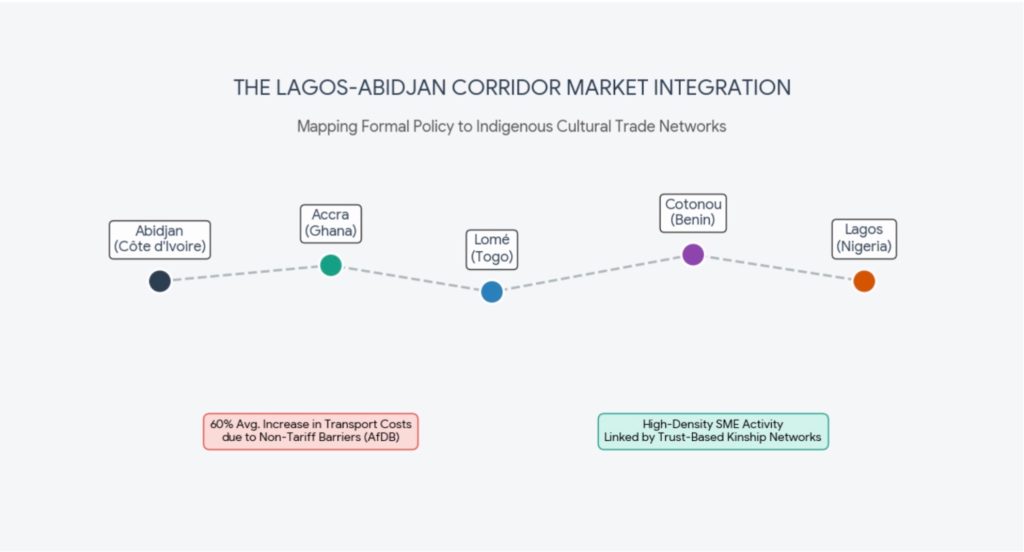
The article explores the opportunities and operational bottlenecks faced by Small and Medium Enterprises (SMEs) expanding across the high-density Lagos-Abidjan corridor (spanning Nigeria, Benin, Togo, Ghana, and Côte d'Ivoire). It demonstrates that successful regional integration requires combining macro-level free trade agreements with a deep mastery of grassroots, informal cultural trade networks.
How New Trade Policies and Youth Empowerment Initiatives Are Reshaping the SME Landscape in Botswana

How New Trade Policies and Youth Empowerment Initiatives Are Reshaping the SME Landscape in Botswana

Botswana’s SME sector is being reshaped by trade reform, youth entrepreneurship support, and national transformation planning. This article examines how Sothern African Customs Union (SACU), The African Continental Free Trade Area (AfCFTA), the Botswana–Rwanda agreements, China’s zero-tariff policy, the Youth Development Fund, and the Botswana Economic Transformation Programme are changing opportunities for small businesses. It argues that these policies are widening market access and encouraging entrepreneurship, especially among young people, but their impact depends on practical support. SMEs still face customs procedures, compliance costs, financing gaps, and limited export readiness. The paper shows that trade policy alone is not enough; businesses also need infrastructure, training, and business development support to benefit fully. Overall, Botswana’s SME future will depend on how well government, entrepreneurs, and private institutions connect market openings with practical enterprise support and inclusive economic transformation. (Government of Botswana)
Volunteering with AAE

Volunteering with AAE

Volunteering Volunteers Tasks The first step to volunteering with AAE is to create/update your volunteer profile , As a volunteer, you will be contributing to our strategic shift from “education/advocacy…