
The Ada Songor Lagoon, a designated Ramsar wetland and one of West Africa’s largest salt-bearing coastal lagoons, stands as a multi-functional natural asset that has sustained crop farming, artisanal fisheries and salt production for generations of Ada communities since long before Ghana attained republican status in 1960. This analytical article traces its evolving governance, economic function and ecological trajectory from the founding of the First Republic to the present. It unpacks the recurring tensions between communal customary rights, state resource policy, large-scale private investment and wetland conservation, extracts actionable lessons for African natural-resource entrepreneurship, and proposes an inclusive development roadmap aligned with the African Continental Free Trade Area and sustainable wetland stewardship. Rather than framing the lagoon merely as a commodity reserve, this analysis treats it as an integrated socialecological business asset whose long-term value hinges on balanced benefit-sharing, participatory governance and cross-resource coordination among crop, fishery and salt sectors.
1. The Lagoon at the Dawn of Ghana’s First Republic (1960–1970s): A
Communal Production System
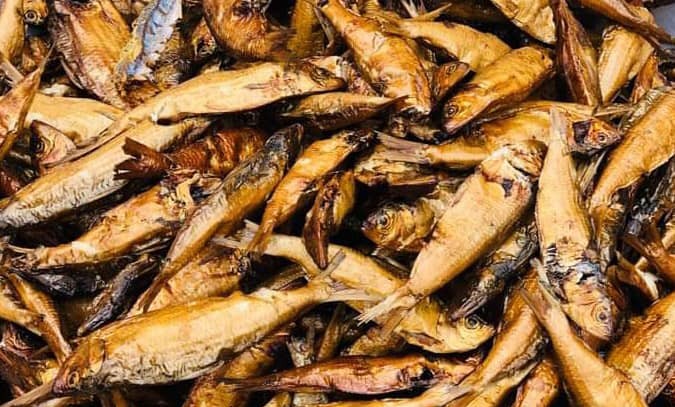
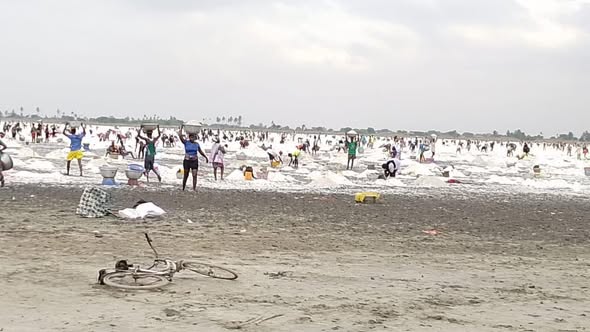
When Ghana became a republic in 1960, Ada Songor operated under a customary, community-centred resource regime. Local households rotated across its seasonal cycles: fishing during the rainy season, small-scale crop cultivation on fertile fringe wetlands, and solar salt harvesting in the dry months. Access was governed by traditional authorities; production was largely subsistence and small-scale, with limited formal state control and almost no industrial concession.
This model delivered broad, distributed livelihood gains, especially for women who dominated artisanal salt extraction and fish trading. The state’s early republican policy prioritised national self-reliance and agricultural expansion, yet it largely left the lagoon’s multi-resource system untouched. The core strength of this era lay in its embedded reciprocity: resource users bore direct responsibility for ecological maintenance. The critical limitation, however, was low productivity, limited value addition and no formal mechanism to protect the wetland from gradual overharvesting as population grew. By the mid1970s, the state began to identify Songor’s salt deposits as a strategic national economic asset, setting the stage for a decades-long shift toward commercial leasing and industrial exploitation.
2. Restructuring, Conflict and Fragmentation (1980–2019): The Cost of Siloed Resource Development
From the 1980s onward, successive governments opened parts of the lagoon to large-scale salt enterprises, beginning with Vacuum Salt Products Limited. This shift triggered the first major violent conflict in 1985, when clashes between local miners and the company led to the death of Margaret Kuwornu, a pregnant local salt producer. The subsequent Amissah Committee of Inquiry explicitly recommended that no single actor be granted exclusive monopoly over the lagoon, and called for coexistence between industrial operators and artisanal communities — a recommendation that would remain only partially implemented for decades.
This period exposed a persistent structural flaw: state and commercial actors treated salt, fishery and cropland as separate, competing resources instead of interconnected components of one wetland system. Large salt pans altered hydrology, shrinking fishing grounds and salinising marginal farmland; unregulated artisanal harvesting degraded mangroves and sediment quality; crop runoff introduced nutrients and contaminants that hurt both fisheries and salt purity.
The most explosive chapter arrived in 2020, when the state granted Electrochem Ghana Limited a controversial long-term lease covering nearly the entire lagoon complex. Local communities argued the lease erased ancestral customary access and violated protections for communal wetland use. For years, artisanal miners were barred from large swathes of the lagoon, sparking protests, arrests and sustained civil-society pushback. While the investor framed the project as a pathway to turn Songor into a regional salt export hub with up to USD 1 billion in projected annual revenue, local livelihood security and ecological integrity became collateral damage. By the mid2020s, partial negotiated access was restored for community miners outside the core industrial concession, but trust between investors, the state, traditional leaders and residents remained fragile.
Three core lessons emerge from this long conflict phase:
- Monopolisation of multi-use wetland assets erodes social stability: Exclusion of customary users undermines local buy-in, even when a project promises high national export revenue.
- Siloed resource planning destroys system value: Salt, fish and crops depend on shared hydrology; optimising one sector alone degrades the others.
- Investment without binding benefit-sharing fails to deliver inclusive growth: Job creation and infrastructure must be tied legally to local communities, not left to voluntary corporate social responsibility.
3. Current Condition: Opportunities and Binding Constraints
Today, Ada Songor sits at a crossroads. Its salt endowment can position Ghana as a leading supplier of industrial and edible salt across the ECOWAS bloc under AfCFTA. Restored seasonal access for artisanal producers has stabilised local livelihoods, while new investment proposals envision integrated salt processing, export port infrastructure and women-focused salt-pan cooperatives. Scientific monitoring, meanwhile, confirms that the lagoon faces measurable water-quality degradation, heavy-metal accumulation and mangrove loss from decades of competing extractive pressures; climate change amplifies these risks through shifting rainfall patterns, sea-level rise and erratic evaporation cycles that disrupt both fishing and salt crystallisation.
The biggest opportunity is to redesign Songor as a demonstration site for African wetland-based inclusive enterprise: combining large-scale industrial production, women-led small cooperatives, organic fringe cropping, sustainable fishing and ecotourism. The binding constraints are equally clear: unresolved tenure ambiguity, weak cross-sector regulatory coordination, limited technical support for local producers, and a persistent tendency for policymakers to prioritise short-term export revenue over long-term ecosystem health.
4. The Way Forward: An Integrated Governance and Business Roadmap
Drawing on the lagoon’s six-decade history, this article advocates for a hybrid, multi-stakeholder management framework built around four pillars.
Pillar One: Legal and tenure clarity for layered access
The government and Ada Traditional Council should formalise a zoned access master plan, respecting the Amissah Committee principle against full monopoly. Separate, demarcated zones should be designated: industrial salt concessions, reserved communal pans for artisanal miners (with guaranteed access for women producer groups), sustainable fishing corridors, low-impact crop plots on non-saline fringes, and strictly protected ecological buffers around mangroves. Customary use rights must be codified alongside formal leases, so local communities hold enforceable rights rather than temporary permission.
Pillar Two: Integrated, cross-resource business development
Instead of separate value chains for salt, fish and crops, stakeholders should build a circular local economy. Artisanal cooperatives can produce branded, traceable Ghanaian sea salt for regional markets; fisherfolk can adopt rotational fishing seasons; fringe farmers can pursue salt-tolerant, climate-resilient crop varieties. Large investors should be required to partner with local cooperatives for raw material sourcing, packaging and logistics, creating shared margins rather than purely extractive arrangements. This integrated model aligns with AFCFTA’s vision of regional value chains and turns the lagoon’s diversity from a source of conflict into a competitive advantage.
Pillar Three: Embedded ecological monitoring
A community-led monitoring board, including scientists, traditional stewards, civil society and company environmental teams, should track water salinity, sediment quality, fish stocks and mangrove cover year-round. Environmental impact assessments must cover the full wetland system, not only the footprint of a salt operation or farm plot, and automatic corrective triggers should apply if thresholds for water quality or biodiversity are breached.
Pillar Four: Inclusive finance and capacity building
Targeted microfinance, business training and climate-adaptation grants should prioritise women producers, who have borne the heaviest losses during past exclusion periods. Investors should contribute to a dedicated community trust fund for education, healthcare and wetland restoration, governed by elected community representatives rather than only company or state officials.
Conclusion
Since Ghana’s First Republic in 1960, Ada Songor Lagoon has illustrated a recurring paradox across Africa: natural assets that can drive transformative prosperity often become sources of inequality and conflict when governed for a single commodity. Its history teaches that “development” for a multi-resource wetland cannot mean choosing between industrial growth and local livelihoods, or between commerce and conservation.
If managed through layered rights, cross-sector coordination and enforceable benefit-sharing, Songor can become a regional blueprint: a thriving African business asset that delivers export revenue, sustains intergenerational communal livelihoods, protects Ramsar wetland ecology and proves that natural-resource entrepreneurship on the continent can be equitable and regenerative. For AllAfripreneurs and African business practitioners, the lesson is unambiguous: the value of a natural asset is not measured only by what can be extracted from it, but by how many people can share its gains without eroding the foundation that makes those gains possible.