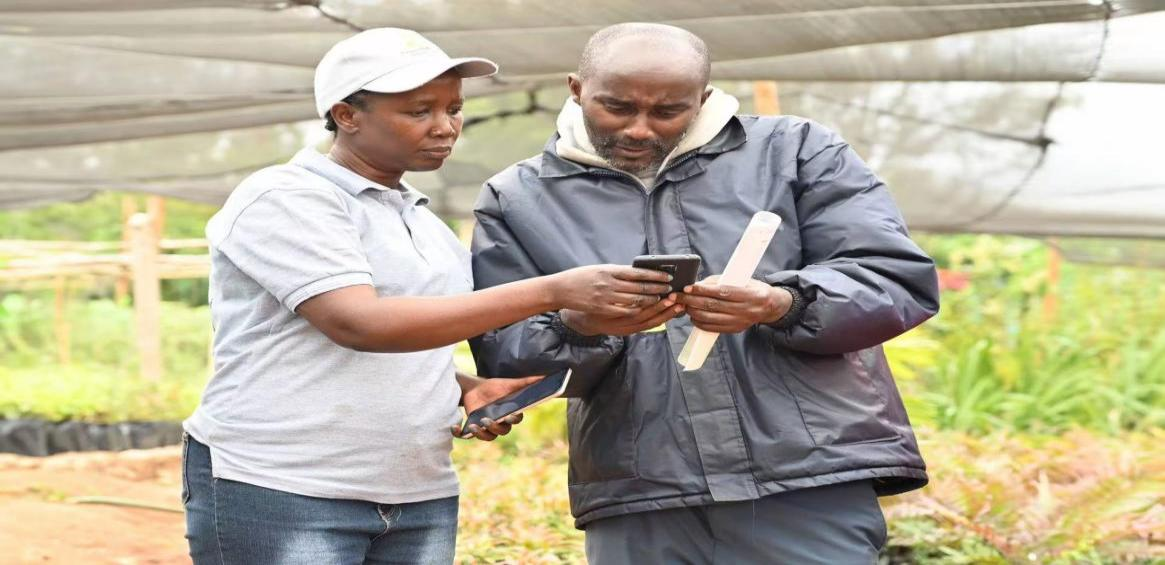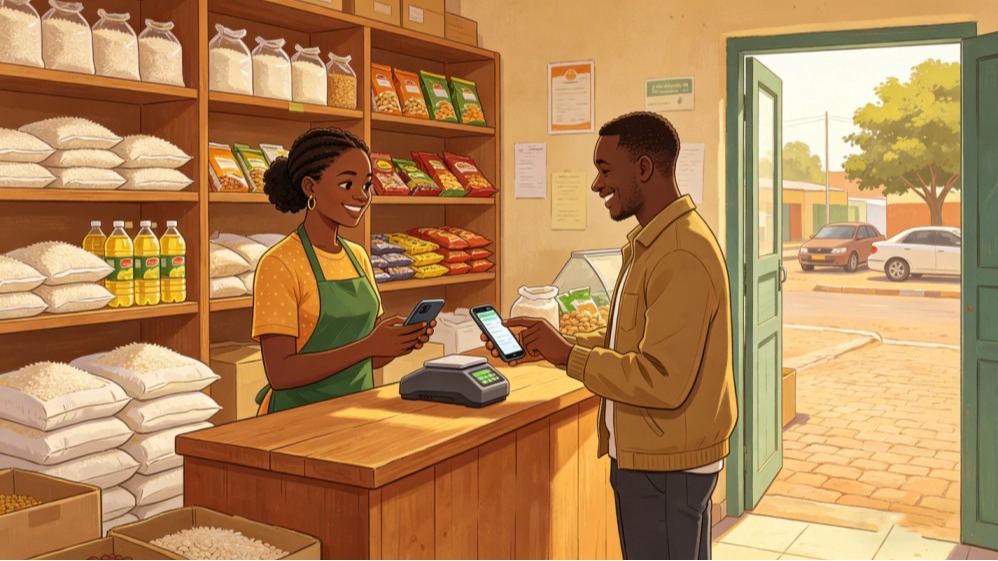

In Kenya, people trust mobile money services like M-Pesa more than traditional banks. This is mainly because mobile money is easy to use, widely available, and fits naturally into everyday life. Even though banks offer more formal protections, many people still prefer mobile money. This shows that there are deeper problems in the financial system that need to be solved to help the economy grow and become more inclusive.
Abstract
Mobile money platforms like M‑Pesa have become more trusted than banks in Kenya due to their accessibility and alignment with informal livelihoods. Yet this trust does not resolve the financial struggles of SMEs, which make up 98% of businesses and 80% of jobs. Banks serve only 20–30% of adults, hindered by complex procedures and past crises. This divide creates a policy challenge. However, hybrid fintech models combining mobile money’s reach with banking structure could unlock SME growth. This article examines the background, challenges, and solutions through case studies and an action plan.
Background
Kenya’s financial system is shaped by a mix of innovation, culture, and infrastructure gaps. In 2009, the Central Bank of Kenya allowed M-Pesa to operate under telecom rules instead of strict banking regulations. This made it easier to expand quickly. As a result, there are now over 50,000 agents across the country, even in remote villages, allowing people to easily deposit and withdraw cash.
Cultural factors also play an important role. Many Kenyans prefer systems based on trust and relationships, such as chamas (informal savings groups), rather than formal institutions. Past banking failures in the 1990s, where people lost their savings, have made many distrust banks. As a result, some people still keep cash at home or borrow from local lenders.
Infrastructure also contributes to this shift. Mobile networks cover almost the entire country, making it easy to send money through phones. In contrast, bank branches are often far away, crowded, and unreliable. Because of all these reasons, mobile money has become deeply integrated into daily life and now handles a large portion of the country’s economic activity.
Challenge
SMEs are the most affected by this divided system. They depend on daily cash flow but struggle to access larger financial support. While mobile money is excellent for sending and receiving small amounts, it does not provide strong credit options. At the same time, banks require formal documents like financial records, land ownership, or guarantors—things many small business owners do not have.
Real-life experiences show this clearly. A trader in Nairobi might say that banks ask for documents they cannot provide, while a local mobile money agent trusts them personally and offers quick service without paperwork. Similarly, a vendor in Kisumu may feel more confident relying on their phone balance than dealing with a bank they do not fully understand.
However, this reliance on informal systems comes at a cost. Around 40% of SMEs turn to informal lenders who charge very high interest rates, sometimes between 20–50%. This traps them in cycles of debt and prevents business growth. Low financial literacy also makes it harder for people to use complex banking apps, while simple SMS-based mobile money systems are easier to understand. As a result, many SMEs fail within a few years due to lack of proper financial support.
Case Studies
Success: Zeze (mobile-based lending system)
Zeze is a fintech solution built on top of M-Pesa that provides small loans ranging from $10 to $100. It uses mobile transaction history to decide who qualifies for credit, removing the need for collateral. It also uses local languages and simple communication methods, making it accessible to more people. This approach has led to high repayment rates and helped small business owners, like bike riders and clothing sellers, expand their work.
Failure: KCB M-Pesa (bank-mobile partnership)
This initiative attempted to combine banking services with mobile money. However, it introduced formal requirements such as identity verification, signatures, and visits to bank branches. These steps made the system more complicated and less appealing. Many users stopped using it because it did not match the simplicity and trust they were used to with mobile money agents.
These examples show that financial solutions must align with local culture and user behavior. Systems that are too rigid or complex are likely to fail.
Suggestions (Action Plan)
- Understand user trust
Conduct surveys among SMEs to understand how they use mobile money and banks. Study agent networks and identify what people trust most. - Develop hybrid systems
Create connections between banks and mobile wallets. Offer small loans based on transaction data without requiring paperwork. - Work through local agents
Train community agents to act as financial guides. Use local languages and culturally relevant methods to build trust. - Improve policies
Encourage cooperation between banks and mobile companies. Create systems that allow easy transfer between platforms. - Scale and monitor progress
Track repayment rates, customer satisfaction, and business growth. Expand successful models gradually and reinvest in agent networks.
Conclusion
Mobile money is successful in Kenya because it is simple, accessible, and based on trust. However, it does not fully solve the financial needs of small businesses. To achieve long-term economic growth, Kenya must combine the strengths of mobile money with the structure and resources of formal banking systems. By doing this carefully and in a culturally sensitive way, it is possible to turn trust into real economic progress.
Works Cited
- AllAfripreneurs. “Digital Financial Services in Kenya: How Mobile Money Is Reshaping Business and Opportunity.” 2025, https://allafripreneurs.org/kenya/digital-financial-services-in-kenya-how-mobile-money-is-reshaping-business-and-opportunity/.
- “Mobile Money and SME Growth in East Africa.” Commerce Journals, vol. 4, no. 1, 2022, pp. 1–12, https://www.commercejournals.com/assets/archives/2022/vol4issue1/4-1-13-528.pdf.
3. Dakane, Mohamed. “Innovation, M-Pesa, and Fintech.” LinkedIn, 2025, https://www.linkedin.com/posts/mohamed-dakane-43a2a26a_innovation-mpesa-fintech-activity-7427094942147170304-_34y.
4. Donnelly, Graeme. “Business Lessons from Inclusive Innovation.” LinkedIn, 2025, https://www.linkedin.com/posts/graeme_donnelly_businesslessons-innovation-inclusivebusiness-activity-7331715927836606465-5IMf.
5. “Fintech Adoption in Kenya.” IRJEMS, vol. 4, no. 2, 2025, pp. 122–130, https://irjems.org/Volume-4-Issue-2/IRJEMS-V4I2P122.pdf.
6. Nzioka, William. “Kenya’s Mobile Money and Digital Finance.” LinkedIn, 2025, https://www.linkedin.com/posts/william-nzioka-989b8244_kenya-mobilemoney-digitalfinance-activity-73942491109046807553-yqz1.
7. SDK Finance. “Fintech in Kenya 2025: Landscape Overview, Growth Drivers and Barriers.” 2025, https://sdk.finance/blog/fintech-kenya-2025-landscape-overview-growth-drivers-and-barriers/.
8. World Bank. Digital Financial Inclusion in Kenya. Open Knowledge Repository, 2024, https://openknowledgebank.org/entities/publication/4f176131-ba1a-5b98-8a97-4ef3d1b24c7b.